STUDIO R&D
07 / SEE THE POSSIBILITIES
A visual introduction to AI-created immersive worlds and the wider spatial expertise behind them.
THE VISUAL COLLECTION
STUDIO R&D
STUDIO R&D
STUDIO PORTFOLIO
STUDIO PORTFOLIO
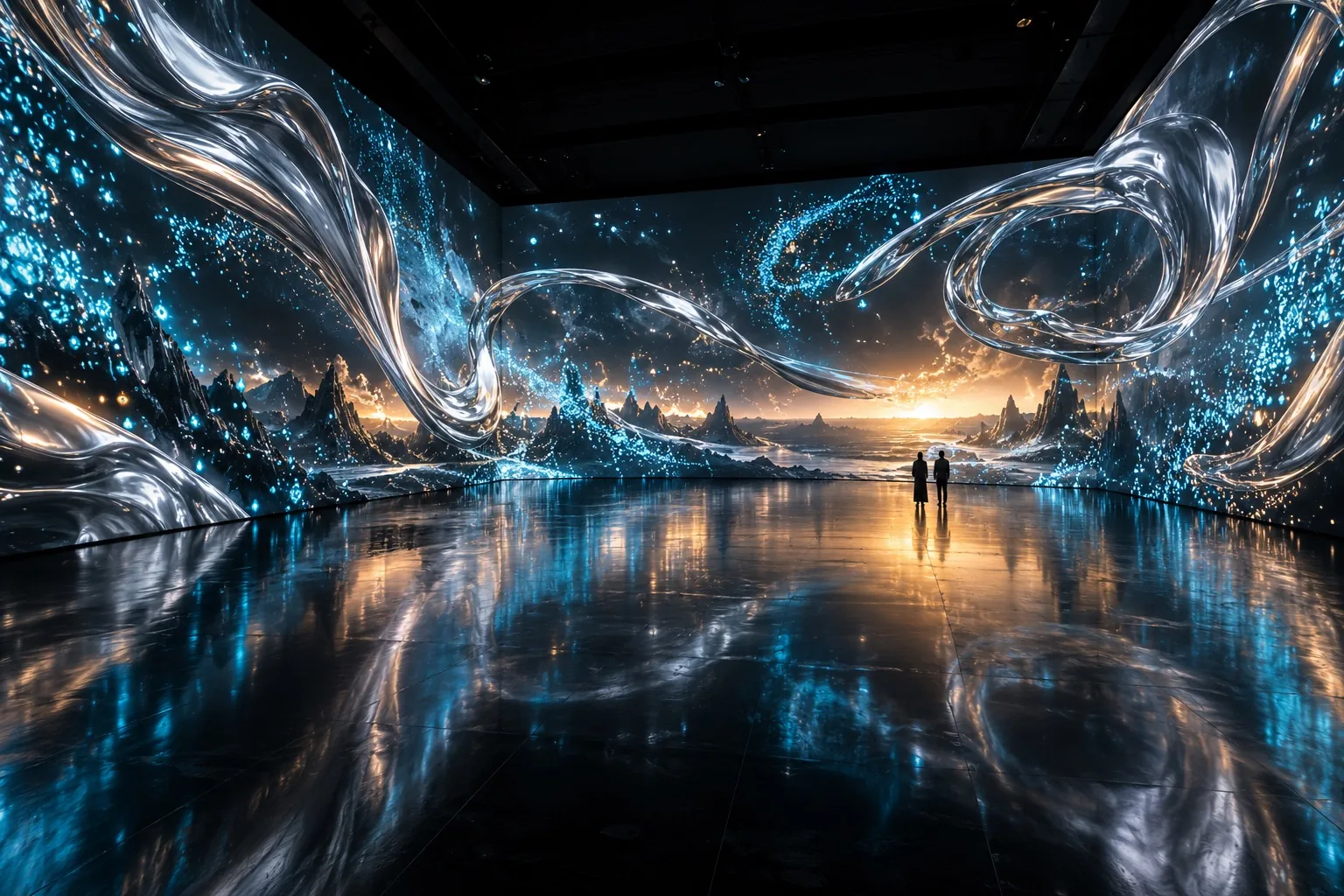
AI-GENERATED CONCEPT
Immersive experience examples are most useful when their context is clear. An AI research visual shows an exploration of a format. A documented portfolio image shows a particular studio project. An imagined concept shows a creative possibility. Each can help an audience understand immersive storytelling, but they should not be presented as interchangeable evidence.
This gallery keeps those distinctions visible. MunchingSquare’s AI-generated 360 video and AI projection-mapping visuals introduce studio research. The spatial installation and virtual reality examples offer context for the studio’s wider immersive expertise. The cinematic immersive room is an AI-generated concept created for this site. Together, they provide different ways of seeing what spatial content can become.
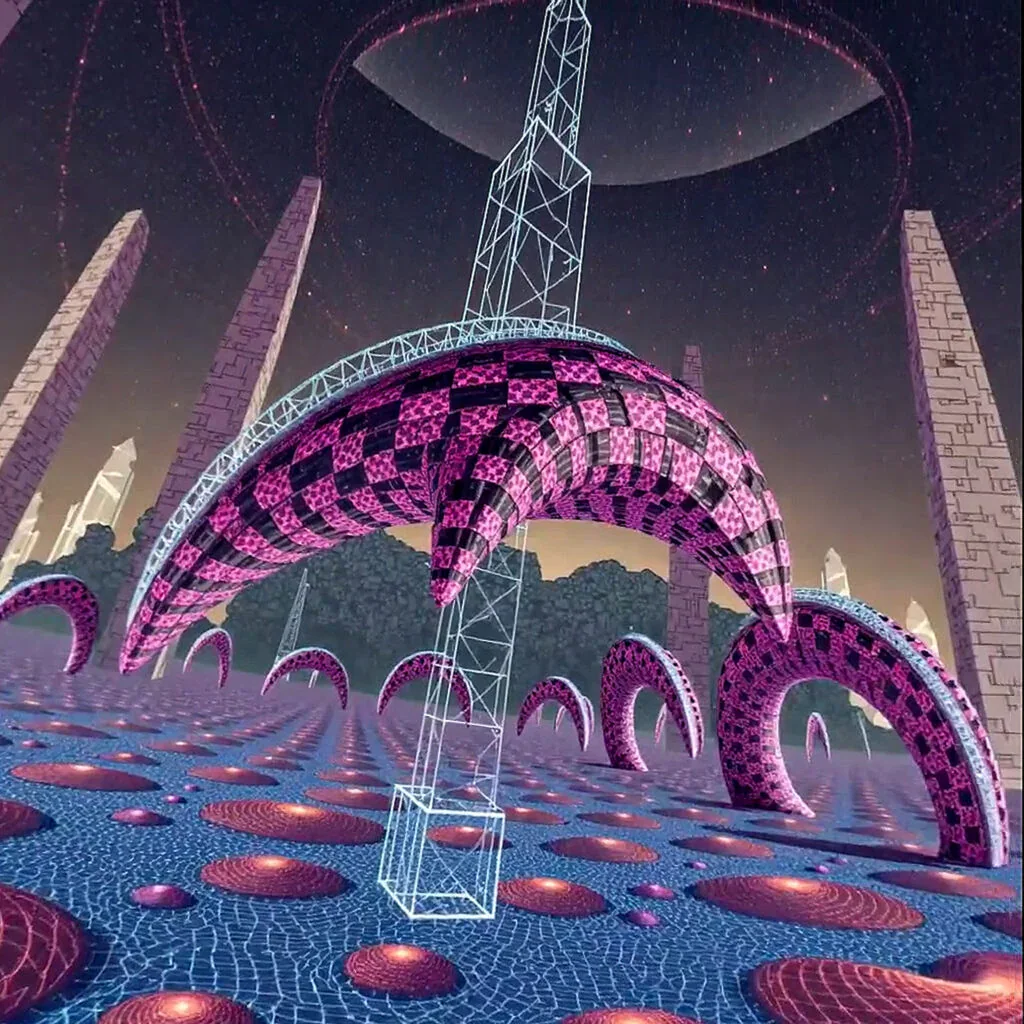
The panoramic research visual introduces an imagined environment with a distinctive character. Its unusual forms suggest a world beyond familiar physical settings. The creative interest lies in the scene’s surrounding quality: an invitation to imagine looking in several directions within one coherent atmosphere.
As a studio R&D example, it gives a concrete reference for MunchingSquare’s exploration of AI immersive imagery. A still image cannot reproduce the full experience of moving panoramic content, but it can communicate the visual direction. Explore the dedicated AI-generated 360 video page for the audience-facing ideas behind this format, without any disclosure of the studio’s proprietary creation pipelines.
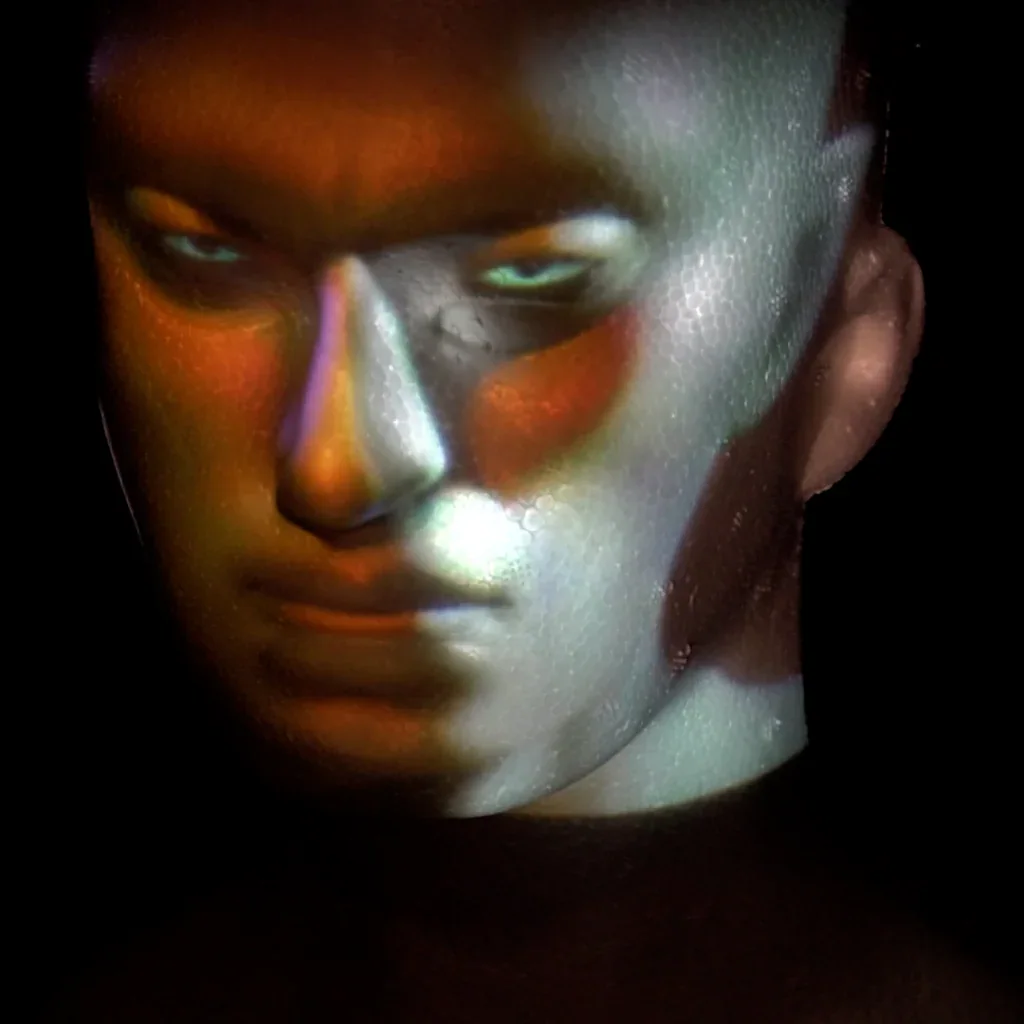
The projection-mapping research visual shows coloured facial imagery on a sculpted head. The physical form gives the image a different presence from a conventional screen. It makes the relationship between a surface and the visual content part of the encounter, suggesting how familiar objects can acquire another character.
This MunchingSquare research image shows generated imagery becoming part of a spatial encounter. It invites attention to the relationship between contour, colour and expression, demonstrating how a physical form can contribute to the character of a visual experience. The dedicated projection page expands the creative possibilities for immersive rooms and shaped surfaces, while keeping the public discussion focused on the audience’s experience.
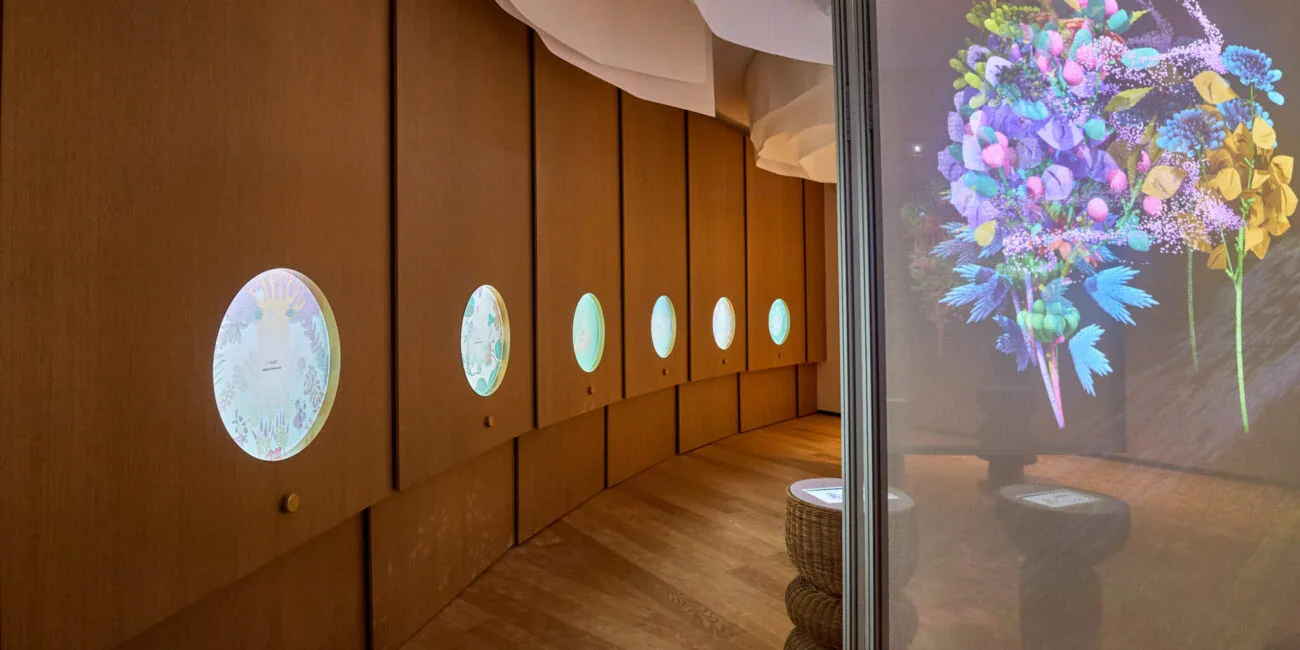
The 7 Herbs portfolio visual shows circular displays within Poland’s pavilion at Expo 2025. It is included as a reference for MunchingSquare’s spatial work. The Curator VR graphic introduces a separate virtual reality project. These examples demonstrate that immersive expertise can span physical settings and virtual experiences.
Neither portfolio example is presented here as an AI-only production. That distinction matters because the new AI-created immersive direction sits within a broader studio practice. The audience can appreciate the range of that practice without confusing established project images with evidence for a particular production method. Visit MunchingSquare’s portfolio to explore the studio’s documented work in its original context.
The site’s cinematic immersive room is an imagined environment, built around a dramatic surrounding canvas. Fluid forms, luminous particles and an expansive horizon suggest the sensation of being inside the image. The small human silhouettes provide a visual reference for scale. It is a concept, not a photograph of a delivered client installation.
Concept visuals help a conversation begin. They can express atmosphere, ambition and a sense of place before a particular project exists. They give a possibility a tangible visual identity, allowing a conversation to move from an abstract ambition towards a sense of atmosphere, scale and place. MunchingSquare’s proprietary AI pipelines are positioned to create high-resolution immersive experiences at scale; the visual concept introduces the kind of imaginative horizon that ambition can open.
A visual example can communicate atmosphere, colour and the relationship between content and space. Its caption supplies the project context, while the composition offers a glimpse of the creative direction. Together, those elements help visitors understand the example and imagine the wider experience without confusing research, portfolio work and concept imagery.
A useful visual reference is the beginning of a creative discussion. Your audience, setting and story give the next world its own identity. A panoramic journey may suit one idea, while a physical immersive environment suits another. A virtual experience offers a different relationship with presence again. The format should make sense for the encounter you want to create.
Browse the topic pages to explore those differences, then meet MunchingSquare. The studio’s immersive expertise connects spatial storytelling with an emerging AI creation approach, using secret pipelines designed for high-resolution experiences at scale. The public invitation is simple: imagine the world your audience should enter, and start a conversation with the experts who can help shape that ambition.
YOUR NEXT WORLD STARTS WITH AN IDEA
High-resolution experiences. Secret AI pipelines. A creative ambition with room to grow.